
Bladder cancer
Adjuvant treatment approaches for MIBC
Management of muscle-invasive bladder cancer (MIBC) after surgery is guided by the risk of disease recurrence. Adjuvant cisplatin-based combination chemotherapy remains an option for eligible patients, although its use is limited by tolerability and modest absolute benefit. Immune checkpoint inhibitors have reshaped the adjuvant setting: nivolumab is established for patients at high risk of recurrence, and emerging data support the use of adjuvant pembrolizumab in selected populations. In addition, ctDNA-guided strategies are gaining clinical relevance, with studies demonstrating benefit from adjuvant atezolizumab in patients with detectable minimal residual disease. Finally, phase II and III data indicate that adjuvant radiotherapy (RT) may improve locoregional control and disease-free survival in patients at high risk for locoregional relapse.
All patients in this course have urothelial carcinoma (UCa) in absence of (extensive) histological subtypes.
Regulatory approval status of adjuvant drugs for MIBC (status 13 July 2026)
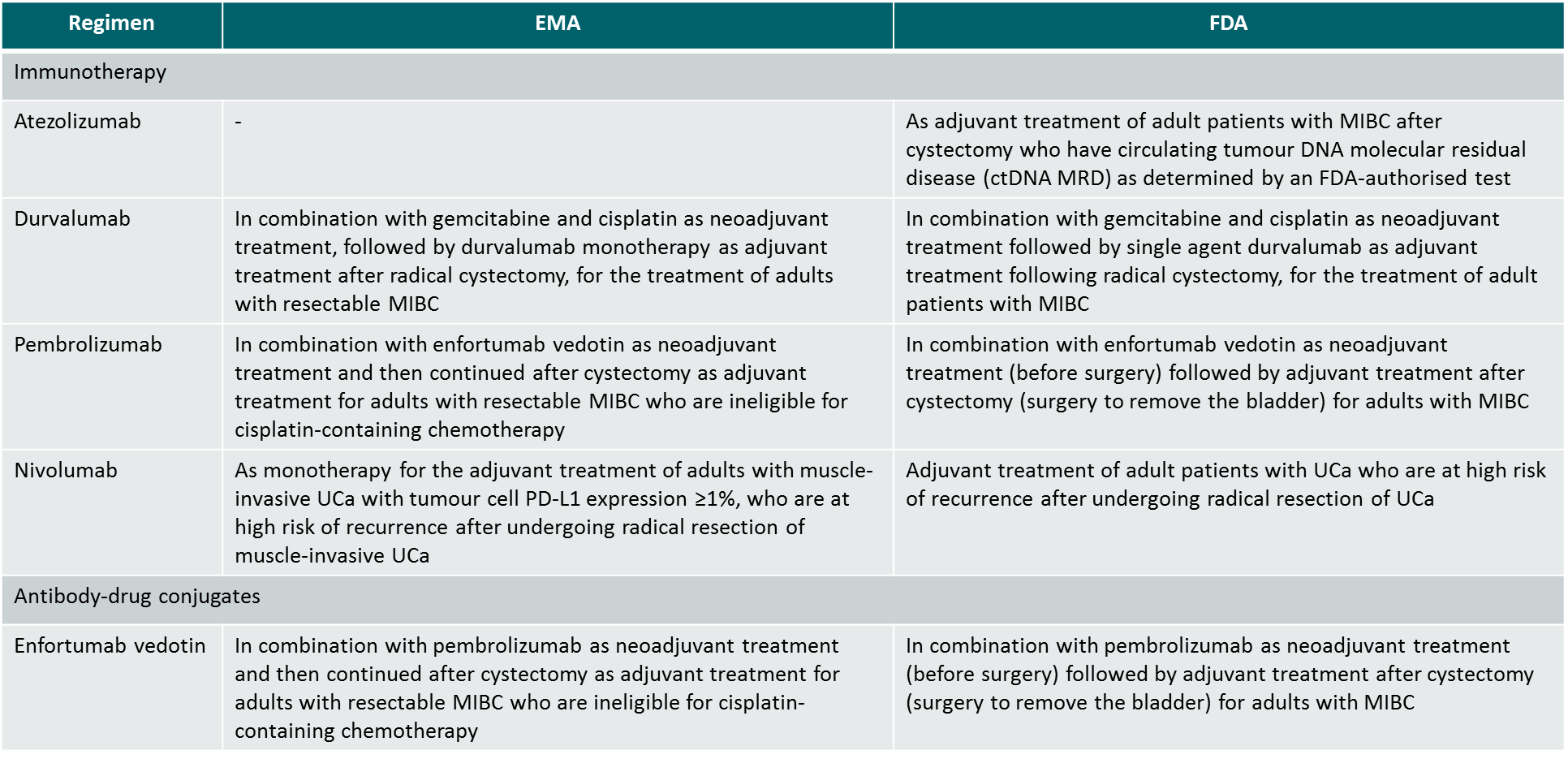
*The definition of high risk of recurrence is based on the Checkmate 274 trial and includes: 1) pT2-4a or pN+ in patients who received neoadjuvant chemotherapy (NAC) or 2) pT3-4a or pN+ in patients who did not receive NAC and are ineligible for or refuse adjuvant cisplatin-based chemotherapy